
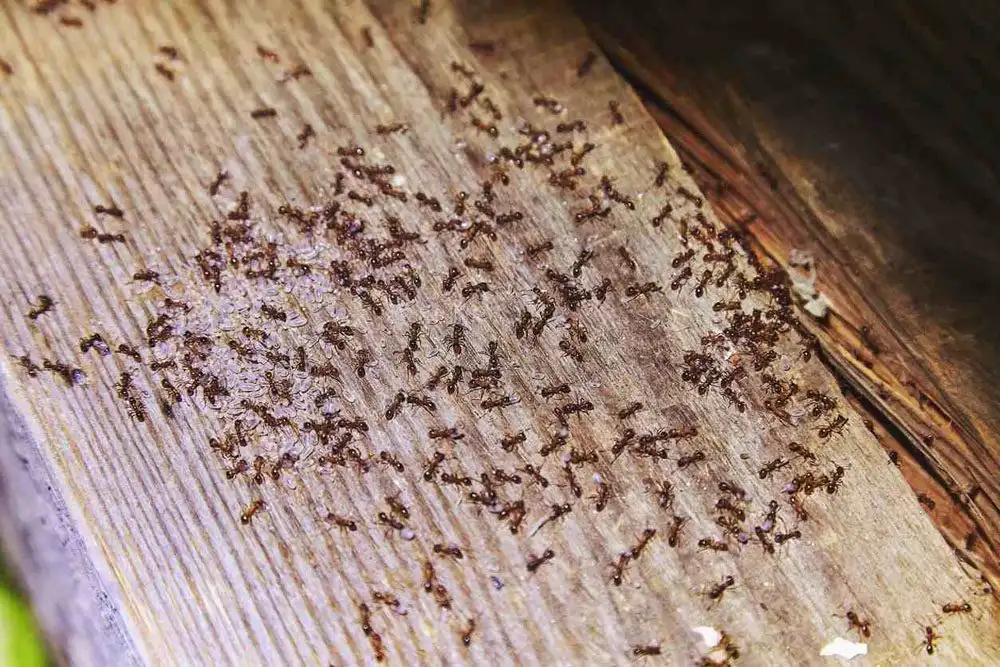
As Beaverton homeowners, we know all about the Pacific Northwest rain, which brings both lush greenery and carpenter ants. Wood-destroying insects do not just appear one night out of nowhere; they leave signs behind that most residents overlook until it is too late.
The humid weather in and around Beaverton, along with the older homes typically found in the Raleigh Hills and Cedar Hills neighborhoods, makes it easy for these pests to establish mechanized colonies in walls, attics, and crawl spaces. Identifying warning signs beforehand will help you avoid costly repairs later.
The best first step is to have a professional inspection if you suspect an infestation to get rid of pests in Beaverton.
Why Are Carpenter Ants A Bigger Problem In Beaverton?
Carpenter ants must love Beaverton. The average annual rainfall is about 42 inches, keeping everything moist and providing the conditions these pests need to tunnel and nest in wood.
Clipper also explained that the city’s tree-lined streets and nearby wooded areas (for example, the Cooper Mountain Nature Park, just minutes away) make homes easy targets for carpenter ants. In the Portland metro area, which includes Beaverton, pest control calls for carpenter ants peak from March through June as colonies produce winged reproductives that disperse to found new nests, according to local pest control data. The cedar siding on your home, or that old deck? They are also prime real estate for these pests, which destroy them.
Subtle Warning Signs That Carpenter Ants Leave
Spotting carpenter ants is tricky, but if you know what to look for, they do leave clues behind:
- Sawdust piles (frass): Little piles of sawdust, like this, surface near baseboards, window sills, or door frames. It is the waste they expel while boring tunnels
- Rustling sounds in walls: A subtle rustling or crinkling sound in walls or ceilings, especially in the snap of the night when they are most active
- Winged ants indoors: Finding winged, large black ants indoors in springtime is a sign of a nearby mature colony producing new offspring.
- Hollow-sounding wood: Tap the wooden beams or trim. If it is hollow and not solid, there may be the presence of carpenter ants that have carved a tunnel in them
How To Identify If Carpenter Ants Are Really Present In Your Home?
Check areas where carpenter ants commonly nest, such as bathrooms, kitchens, basements, and around windows, especially in moisture-prone areas. Search for frass piles, a mix of coarse sawdust and bits of insect body parts. In homes all across Beaverton, attics and crawl spaces that experienced water damage from our rainy winters are hiding places.
Follow ant trails during the nighttime foraging peak. In contrast to termites, which consume wood, carpenter ants only burrow out their own space, which leaves clean, smooth galleries in damaged areas (if you can reach them). In fact, a perimeter flashlight inspection around your home would help you see entry points, such as tree branches that touch your roofline.
What To Do If You Spot Them
Do not panic, but do not delay either. Over time, carpentry and destruction build up, and sprays you purchase for DIY kill ants you see, but not a hidden colony that could have thousands more. Take Pictures, document the location of the activity, and any visible damage. Businesses like Saela Pest Control provide comprehensive inspections across Beaverton and can determine the extent of an infestation. They provide treatments directed at entire nests, not just the ants you see walking around, and may even help you deal with any moisture conditions that drew them. The earlier you call in experts, the less structural damage you will have to contend with and the lower your repair bills will be.