
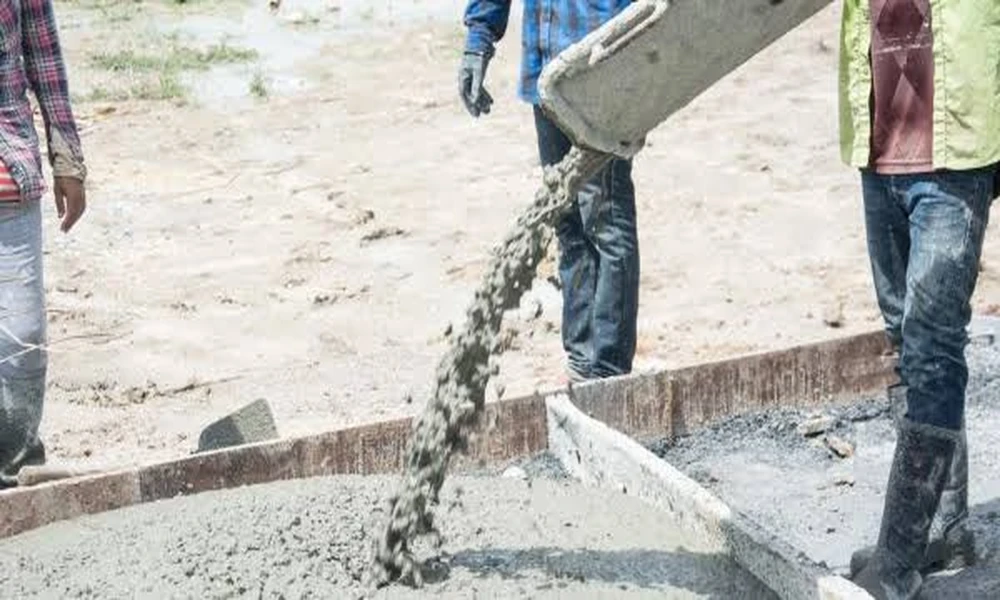
Two summers. That is how long the last patio on my street lasted before the first fracture ran corner to corner. The owner did everything right on paper: 4 inch slab, wire mesh, a Saturday pour under a bright sky. Then the ground shifted, the surface cured too fast, and the whole thing started spidering by August.
Concrete in south Louisiana has three enemies working at once. Heat pulls water out of a fresh slab before it can finish curing. Clay-heavy soil swells and shrinks with every storm. And the rain shows up whether the finisher is ready or not. If you are planning a new surface and want it to still look right in a decade, the people who handle patio and flatwork services in Baton Rouge deal with all three on nearly every job, and the way they sequence a pour is worth understanding before you hire anyone.
Here is what actually goes wrong, and the choices that keep a slab flat.
Why do bayou-country patios crack so fast?
Most cracks trace back to the ground, not the concrete sitting on top of it. South Louisiana carries a lot of expansive clay. That clay drinks water in a rainy week and shrinks hard in a dry stretch, and it moves the slab with it. A patio poured over soil that was not compacted and shaped for drainage will find the weakest point and split there.
Water is the second culprit. Cracking happens when a slab shrinks as it cures, and wetter mixes shrink more. Crews who add extra water to make the pour easier to finish are trading a good afternoon for a cracked surface two years later. A stiff, low-slump mix takes more muscle to screed and far less to repair.
Wind and sun are the third. A surface that dries before it sets leaves the top layer weaker than the middle, which is exactly how you get those fine map cracks that show up within a day.
What good prep looks like under a Louisiana slab
This is the part nobody photographs and the part that decides everything. Ask what happens before the first wheelbarrow shows up.
Excavation should go deeper than the slab thickness so the base can be shaped and sloped away from the house. A compacted gravel base gives the slab something uniform to rest on. On soil that holds water, a vapor barrier under the base keeps groundwater from wicking up into the mix.
- Grading that sheds water away from the foundation, not toward it
- Compaction run in lifts so the base is consistent, not just packed once on top
- Formwork set level to the desired slope, checked with a string line
- Reinforcement placed mid-slab, not trampled to the bottom during the pour
If you get one thing on this list, get the grading. A patio that traps water against the slab edge will punish you with staining, settling, and lush weeds in the joint every spring.
The pour day call that decides your finish
Contractors in this region watch the forecast like pilots. An overcast, humid morning is a gift. Sunshine is the problem.
You want a stable stretch of moderate weather for three or four days after the pour, not just a clear afternoon. Fresh concrete needs moisture to reach strength, and heat sucks it out through the surface. That is why the good crews show up early at dawn, use sunshades or windbreaks when they can, and start curing right after finishing instead of driving off.
For timing context, the National Weather Service outlook for your zip code is a better planning tool than a phone app, because the office that covers your parish will flag heat advisories and afternoon convection that a generic forecast smooths over.
And yes, humidity actually helps. A damp day slows evaporation and lets the slab cure at the pace the mix was designed for. Wind is your real enemy on pour day.
Joints, finish, and cure: the three things you’ll live with
Control joints are not decoration. They tell the slab where to crack when it shrinks, which it will. Joints cut to roughly a quarter of the slab thickness, spaced at intervals tied to slab thickness, give the movement a clean line to follow. Skip them or cut them too late and the concrete picks its own spot, usually across the middle of your best sightline from the kitchen window.
Finish is personal, but a very smooth troweled surface is a slip risk after a rain, and in this climate that rain arrives weekly. A light broom finish with a slight texture holds up better and still looks clean. For a stamped patio, tell the finisher how you plan to use the space, because a heavy pattern complicates a table and chairs sitting flat.
Curing gets treated like an afterthought and it is not. Moist curing, whether with a curing compound or a covered surface kept damp, supports the chemical reaction that gives concrete its strength. Per the Environmental Protection Agency, fresh concrete washout and runoff need to be contained rather than hosed into a storm drain, so a crew that handles washout water properly is also signaling how they handle the rest of the job.
| Stage | What you should see | Red flag |
|---|---|---|
| Prep | Shaped, compacted base and tested slope | Forms set right on bare dirt |
| Pour | Stiff mix, early start, shade on hand | Water added to the truck at delivery |
| Finish | Joints cut the same day | Joints promised for next week |
| Cure | Compound or damp cover, then patience | Driving on it in 24 hours |
A practical timeline for a homeowner
My recommendation for anyone in this region: budget a full week of calm weather around the pour, then wait longer than feels necessary before parking anything on the slab.
- Book the work for a stretch when you can leave the slab alone for a week.
- Ask for the base depth, the mix design, and where joints will be cut, in writing.
- On pour day, make sure the crew starts early and has shade or wind protection set up.
- Keep foot traffic off for the first day, then light use after a few days.
- Wait roughly a week before driving vehicles or placing heavy furniture.
- Revisit in a week to confirm curing was done and joints are open and clean.
If you skip the timeline, the pancake in the kitchen tells you why. Concrete slab thickness and yield follow standard engineering references maintained by the National Institute of Standards and Technology, and a professional yardage estimate is your protection against a thin slab poured to save a truckload.
The part most homeowners never ask about
Ask who is actually finishing the concrete. On many residential jobs the crew pouring is not the crew that owns the liability. Get the name of the person who will run a float across the slab, and ask whether the company cuts its own joints or hands that off. The answer tells you whether anyone is accountable for the finish you will stare at for the next fifteen years.
A patio is a series of small decisions that all happen in one day. Get the base, the mix, the shade, and the joints right and it just sits there, quiet and flat, through every August you own the house. Get them wrong and you will learn exactly what two summers feels like. Start with a crew that can walk you through their pour sequence before they lift a shovel.