
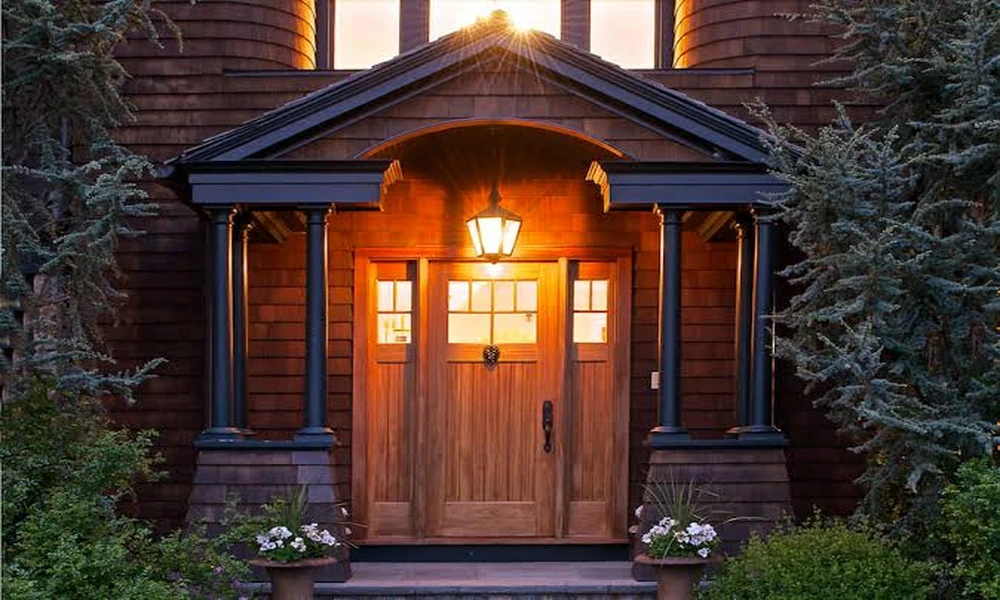
Three coats of paint won’t fix a front door that sticks in July and whistles in January. I’ve watched neighbors burn a weekend on sanding, only to buy the same replacement door a year later. Skip that loop. Your front door is the one exterior upgrade a stranger evaluates in about four seconds, and it’s also the component most likely to be hung wrong. Yes, hung wrong. A premium slab installed by a crew that shims by feel will sag before the second winter.
So here’s the promise: by the end of this piece you’ll know which door upgrades actually register from the street, how to tell a good install from a bad one before you sign, and how to brief a crew so nobody guesses. Nobody.
The first decision isn’t style or color. It’s whether you hire a door replacement contractor or hand the job to a general handyman who happens to own a level. Those are different jobs, and the second one usually ends with you learning more about door frames than you ever wanted. Let’s get into the parts that matter.
What the street actually notices first
Ask ten people to describe a house they drove past yesterday and most can’t recall the roof. They can recall the door. Contrast is the whole game: a deep charcoal slab on a pale brick ranch, or a warm wood tone against white siding. Proportion runs second. A too-narrow door on a wide entry looks like a mistake, even to people who couldn’t tell you why.
Here’s my stance, and it’s not the popular one. Skip the glass inserts with a dozen tiny grids. They photograph beautifully and then collect pollen in every little corner you can’t reach with a cloth. A single sidelight or a clean full-lite panel reads better from the curb and takes ninety seconds to clean.
Function ranks above both. If your current door leaks air, fix that first and let the style decision ride along with it. According to the Department of Energy, exterior doors are among the common air leakage points in a house, which is why a properly sealed installation does more for your comfort than a fancier face ever will.
Steel, fiberglass, or wood: pick by your actual climate
Every door shopping trip turns into a material debate, and the debate usually ignores where you live. That’s backwards.
- Steel takes paint cleanly, holds up to dents reasonably well, and costs the least of the three.
- Fiberglass handles humidity and sun without swelling or rusting, and it can mimic wood grain convincingly.
- Wood looks the best up close and demands the most upkeep, no exceptions.
In a hot, wet climate, fiberglass earns its price premium. In a dry, moderate one, steel is a smarter buy than most salespeople admit. Wood is the choice you make with your eyes open, budgeted for a re-stain every couple of years. I’d pick fiberglass for a south-facing entry nine times out of ten, because sun exposure punishes everything else.
Door replacement also shows up in remodeling spending data. The U.S. Census Bureau tracks residential improvement activity every year, and exterior replacement work consistently sits among the categories households fund without waiting for a full renovation. That tells you something useful: this is a maintenance decision most homeowners eventually make, not a luxury purchase.
How to spot a crew that installs doors for a living
I use a three-question test on any contractor who quotes my entry. It takes five minutes and filters out most of the field.
One: Ask what they do with the rough opening when the old frame comes out. A real installer describes flashing, sealing, and squaring the opening. A salesperson describes the door.
Two: Ask to see a finished install from the inside, not the showroom side. Look at the gap between door and frame. Even and narrow all the way around means someone cared.
Three: Ask who comes back if the door won’t latch in August. A direct answer with a name is what you want. A shrug is your answer.
According to the National Association of Home Builders, the remodeling trade is dominated by small firms, which means your job is usually someone’s reputation, not a corporate help desk. That cuts both ways. You get real accountability, and you also get zero protection if you hire on price alone.
The Curb Weight Test: my five-minute, no-tools filter
Here’s a framework I came up with after watching three neighbors choose doors. I call it the Curb Weight Test, and it has three parts. Stand on the sidewalk at the distance a passing car sits and look at your entry. Score each part from one to five.
- Read the door. Can you tell what color it is from across the street, or does it dissolve into the wall?
- Weigh the entry. Does the door look like it belongs to the house, or like it was ordered for a different one?
- Feel the hardware. A cheap handle on a good door ruins the whole impression, and it’s a fifteen-dollar fix.
Score under nine and your problem might be a $40 handle plus a paint color, not a new slab. Score ten or more and the door itself is the weak point. This is the test I run before recommending replacement to anyone, because half the time the answer saves money.
A briefing checklist for install day
Write this down before the crew arrives. It’s the difference between a door that feels solid for a decade and one that rattles by fall.
- Confirm the swing direction and which side the handle sits on. Reversing this after the frame goes in costs real money.
- Decide on the threshold style now, not mid-install. Low-profile thresholds help if anyone in the house uses a walker.
- Ask where the old door goes. A crew that hauls it away is worth a few extra dollars.
- Check the seal yourself, from inside, with the door closed and the lights off. Any daylight is a callback.
- Get the warranty in writing, and read whether it covers the slab, the labor, or both.
One concrete scenario I’ve seen play out twice on my own street: a homeowner picks a beautiful door, skips the briefing list, and the crew installs it swinging into the coat closet. The door was fine. The handoff was the failure. Spend ten minutes on the list and you avoid that entirely.
So is it worth replacing, or should you repaint?
Repaint if the door is solid, seals well, and the only complaint is color. That’s a weekend and a gallon of paint. Replace if the door sticks, leaks air, has a cracked panel, or sits in an entryway that looks tired from the road. You’ll feel the difference in winter drafts long before anyone compliments the color.
And when you do replace, hire someone who does doors for a living rather than someone squeezing it in between drywall jobs. A door is a system: slab, frame, flashing, seal, hardware. Get one part wrong, and the other four won’t save you.
Stand on your sidewalk tomorrow and run the Curb Weight Test. What score did your entry actually get?