
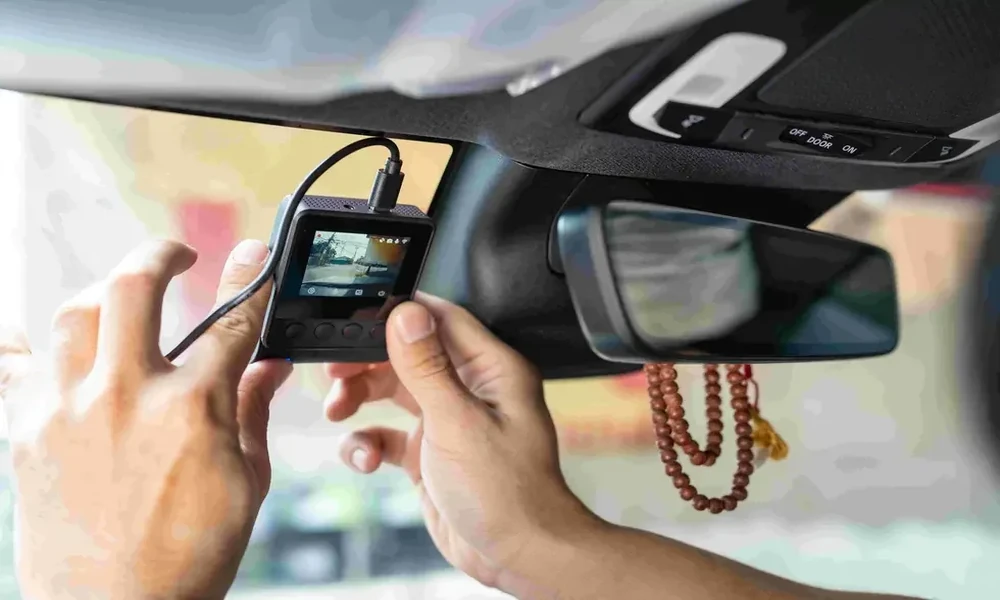
Four seconds. That’s roughly how long the average collision unfolds before drivers even register what happened. And in those four seconds, every detail that matters to an insurance adjuster or a court, speed, lane position, who had the light, gets locked inside a tiny camera mounted on your windshield. Or it doesn’t, because you never installed one.
Dashcams have moved from a niche gadget to a genuine legal tool. The footage they capture doesn’t lie, doesn’t panic, and doesn’t forget. But raw video alone won’t win anything. How you handle that footage in the minutes, days, and weeks after a crash is what actually determines whether it helps you or hurts you.
Why Crashes Are So Common and Why Evidence Is Everything
The numbers are sobering. In 2024, NHTSA recorded 39,254 motor vehicle traffic fatalities in the United States, and an estimated 2.42 million people were injured in motor vehicle traffic crashes that same year, according to NHTSA’s 2024 traffic crash research note. Even as fatality rates inch downward, crashes remain a daily reality for millions of drivers.
What makes most crashes genuinely complicated is not the physics. It’s the disagreement. Two drivers walk away from a fender-bender with two completely different stories, and human memory is a notoriously poor recorder under adrenaline. One of the main benefits of dashcam footage is that it offers an unbiased record of events. Unlike witness testimony, which can be unreliable, dashcam video captures the exact moment of a car accident. That objectivity is worth more than any sworn statement when fault is genuinely disputed.
The Dashcam Adoption Surge
Adoption is climbing fast. According to a 2026 survey by AutoInsurance.com, 30% of U.S. drivers now use dashcams, with 40% of those owners having already filmed at least one crash or traffic event. The same AutoInsurance.com study found that four in ten dashcam users have already captured at least one crash or traffic event on video, and half of those clips have been used for insurance claims or other legal matters.
The motivation is partly reactive. About 39% of dashcam owners purchased one following a car accident or near-miss, which is the classic case of wishing you’d had it before you needed it. Don’t be that driver. Mounting a camera before anything happens is the only way it can actually protect you.
A supermajority of drivers surveyed, 70 percent, now want automakers to install dashcams at the factory, which signals a cultural shift. The camera is becoming table stakes, not a luxury add-on.
What Your Dashcam Actually Captures (and What It Misses)
Modern dashcams record far more than video. A dashcam serves as a source of potential digital evidence to reveal the truth of a traffic accident, storing multimedia data along with additional information needed for accident investigation, including time, location, speed, and accelerometer data, according to research published in Forensic Science International: Digital Investigation by ScienceDirect. You can access that metadata-driven dashcam analysis study here.
That metadata layer matters. Speed at the moment of impact, braking data, GPS coordinates: these details can support or undermine an accident reconstruction in ways that a video frame alone cannot.
But cameras have blind spots. While dashcam footage can be useful, it may not always be enough to settle a case. The camera may not capture all relevant details, such as what occurred just outside the camera’s view. A rear-end collision that starts behind your car is entirely off-camera if you only have a front-facing unit. That’s why more experienced dashcam owners are adding rear lenses. More than half of dashcam owners now add a rear lens, and nearly one-third film the cabin, which is particularly valuable for rideshare drivers.
The C.A.P.T.U.R.E. Protocol: What to Do Right After the Crash
This is the part most dashcam guides skip. The camera captures the crash. What you do next determines whether that footage survives long enough to matter. Here’s a practical sequence I call the C.A.P.T.U.R.E. protocol:
- Confirm the camera was running. Check the indicator light or screen immediately. Some cameras stop recording after impact if the memory card is full.
- Archive the clip manually. Many dashcams have an emergency lock button. Press it. This prevents the loop-recording feature from overwriting the crash file.
- Photograph the camera’s position before moving the vehicle. This documents the angle and field of view for later analysis.
- Transfer to a secure device. Copy the file to a phone, laptop, or cloud backup the same day. Do not rely solely on the SD card.
- Untouched original stays untouched. Do not edit, clip, or filter the footage for any reason before getting legal guidance.
- Report the file to your insurer. Submit it in its original format, not a compressed social-media upload.
- Engage qualified help. Review the footage with an attorney before submitting it to the opposing party’s insurer.
That last step is not optional. In a dispute over dashcam footage, the insurance adjuster will look for any reason to devalue the claim and may use the footage to argue that you had time to brake and failed to do so, assigning you a percentage of the fault. A professional reviewing the footage first can flag those vulnerabilities before they’re used against you.
When Footage Hurts You
Here’s the scenario nobody wants to think about: your dashcam captured the crash, and it shows you were also doing something wrong. Maybe you were five miles over the limit. Maybe you were late on the brake. In Virginia, contributory negligence rules are strict. Even partial fault can affect a claim significantly.
That’s exactly why consulting Auto Accident Lawyers in Lynchburg, VA, before sharing footage with any insurer is a smart move, not a delay tactic. An attorney can assess what the footage shows, frame the context accurately, and prevent you from inadvertently handing over evidence that gets spun in the wrong direction. A skilled attorney knows how to frame the evidence to counter insurer tactics, explaining, for example, that the wide-angle lens of a dashcam often makes objects appear farther away than they actually are.
Choosing the Right Camera Before You Ever Need It
Not all dashcams are created equal. Resolution matters in court. The usefulness of dashcam footage in a car accident claim will depend on the quality of the footage and its angle. A low-end dashcam might not provide a wide enough angle or picture quality to provide much useful information.
Aim for at least 1080p resolution and a wide-angle lens of 140 degrees or more. Loop recording is standard and good. Built-in GPS logging is worth paying extra for because it documents speed and location independently of video frames. Parking mode, which records while the car sits unattended, protects against hit-and-run scenarios in parking lots.
A table comparing the types of incidents each camera configuration covers:
| Camera Setup | Front Collision | Rear-End Impact | Side Swipe | Parking Lot Damage |
|---|---|---|---|---|
| Front-only | Yes | No | Partial | No |
| Front + Rear | Yes | Yes | Partial | Rear only |
| Front + Rear + Parking Mode | Yes | Yes | Partial | Yes |
| 360-degree system | Yes | Yes | Yes | Yes |
For most daily commuters, a front-plus-rear setup with GPS logging covers the vast majority of real-world scenarios and costs far less than a deductible.
The Footage Is a Starting Point, Not a Finish Line
Dashcam video is powerful precisely because it’s objective. But objectivity still needs interpretation. Camera angle distorts distance. Lighting affects perceived speed. Metadata needs expert analysis to be presented correctly. The drivers who get the most out of their dashcam footage are the ones who treat it as the beginning of a documented case, not the end of one.
Install the camera today. Follow the C.A.P.T.U.R.E. protocol if you ever need it. And when the footage matters most, make sure the right people are in the room before anyone else sees it.