
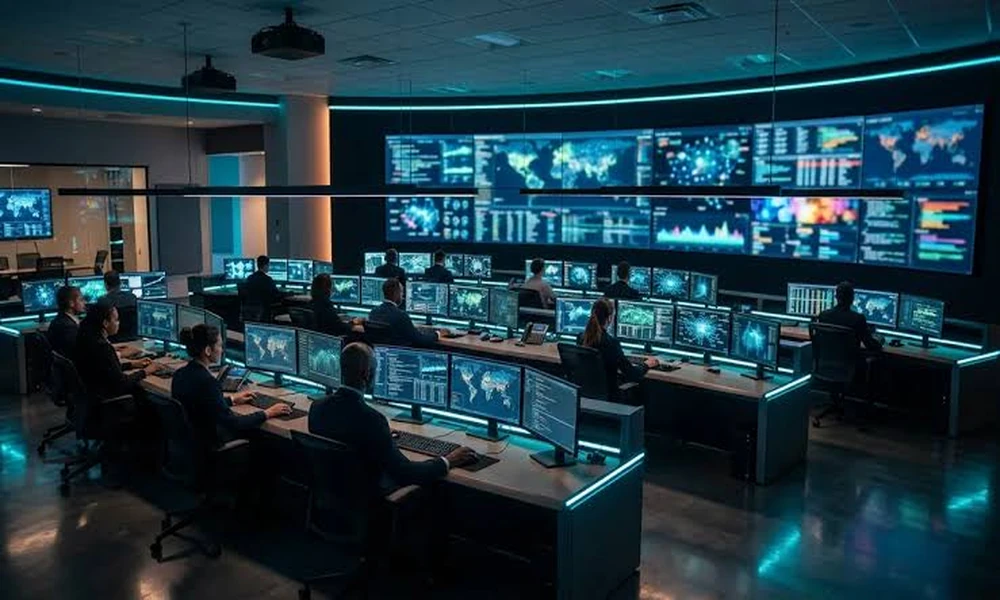
It’s two in the morning, and an analyst somewhere is looking at a login attempt from a country the account holder has never traveled to. Nothing’s broken yet. Nobody outside that room will ever hear about this moment, because in about four minutes the account gets locked and the attempt goes nowhere.
That’s the part of cybersecurity operations services malaysia work most businesses never see, and the reason it’s so easy to underinvest in. The job is designed to be invisible when it’s working, which means its value rarely shows up anywhere a budget conversation would notice.
Why This Work Stays Out of Sight by Design
A security operations team succeeding looks identical to nothing happening at all. There’s no incident report, no downtime, no customer-facing disruption to point to as proof of value. The absence of a crisis is the entire deliverable, and absences are notoriously hard to put a number on.
That invisibility creates a strange incentive problem. The better the team performs, the less evidence exists that they’re needed, right up until the one week they’re understaffed or under-resourced and something actually gets through.
What Actually Gets Watched, Hour by Hour
Most of the work isn’t dramatic. It’s pattern recognition, applied constantly, across a stream of activity that would overwhelm anyone trying to eyeball it manually. A login from an unusual location. A spike in failed authentication attempts. A file transfer at a volume or time that doesn’t match normal behavior for that account.
None of these individually mean much. An employee could just be traveling. A failed login could be a typo. What matters is the pattern across many of these signals at once, and having someone trained to tell the difference between noise and an actual problem.
That sequence, run calmly and quickly, is the difference between an incident nobody outside the team ever learns about and one that ends up in a client notification email.
A Quick Reference for What Good Monitoring Includes
A handful of capabilities separate genuine security operations coverage from a dashboard nobody’s actively watching.
- Continuous monitoring, not just business-hours coverage, since attackers don’t work on a schedule
- Behavioral baselines for normal activity, so anomalies actually stand out against something
- A defined, practiced response sequence, not an improvised one built in the moment
- Regular review of what’s being logged, since a monitoring tool only helps if it’s watching the right things
- Clear escalation paths, so a genuine incident reaches a decision-maker fast, not after several handoffs
Why the Quiet Weeks Are the Ones Working
A business without incidents to point to isn’t necessarily under-protected. Often it’s the opposite. The quiet stretch is what a functioning security operations setup is supposed to produce, and it’s easy to mistake that quiet for proof the investment wasn’t needed.
The incidents that matter most with cybersecurity operations services malaysia coverage in place are usually the ones caught and shut down before anyone outside the security team ever hears about them. That’s not a lack of activity. It’s the whole job, done well enough to stay invisible.